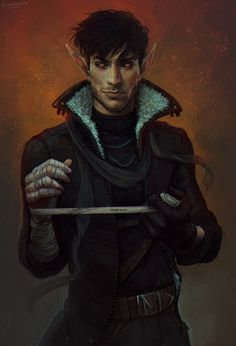
High Elf
20 points
High elves are the ones in splendid clothing who go about singing laments and being ominous. They like little better than to stride into the inn, pull back their hood, and say something deep and lyrical that puts a damper on the merrymaking. They do make good bards and wizards, though.
Attribute Modifiers: ST-1 [-10]; IQ+1 [20].
Advantages: Appearance (Attractive) [4]; Magery 0 [5]; Musical Ability 1 [5]; Voice [10].
Perks: Elven Gear [1].
Disadvantages: Sense of Duty (Nature) [-15].
Features: Gold, silver or very dark brown hair.
All are slender (find height normally for ST, add 2”, and leave weight alone), magically attuned (Magery 0 primarily means “can sense magic items,” but does make it 5 points cheaper to play a wizard).
The majority of elves have Sense of Duty (Nature), which can be fairly limiting. It’s functionally equivalent to Charitable and Pacifism toward any plant or animal that isn’t actively in the process of eating the elf, and extends to beast-men, faeries, wildmen, and other non-technological races. If an elf plays against type in this regard, the GM is free to award him fewer points for the adventure.
Most (but not all) elves also have a special perk:
Elven Gear: 10% off the final price of gear qualified as “elven” – armor, rations, weapons, etc.
Finally, elves may buy up to four levels of a racial Talent during character creation (wood elves start with two levels):
Forest Guardian: You’re the product of eons of selective breeding for the task of sneaking around in the bushes, peppering litterers with arrows. This Talent adds to Bow, Camouflage, FastDraw (Arrow), Stealth, and Survival (Woodlands). Only elves can have it. Reaction bonus: Druids, faeries, and bunnies.
5 points/level.